The landscape of financial crime prevention has evolved dramatically over the past decade, yet few regulatory constructs remain as pivotal—and as frequently misunderstood—as the OFAC 50 percent rule. For compliance officers, risk managers, and legal teams operating within the anti-money laundering (AML) ecosystem, understanding how this rule interfaces with standard AML check procedures is not merely a best practice; it is a legal imperative. The U.S. Department of the Treasury’s Office of Foreign Assets Control (OFAC) established this rule to extend sanctions exposure beyond explicitly listed individuals and entities to those who own or control them. When combined with robust AML check systems, the 50 percent rule becomes a powerful tool for disrupting illicit finance networks before they can embed themselves within the global banking system.
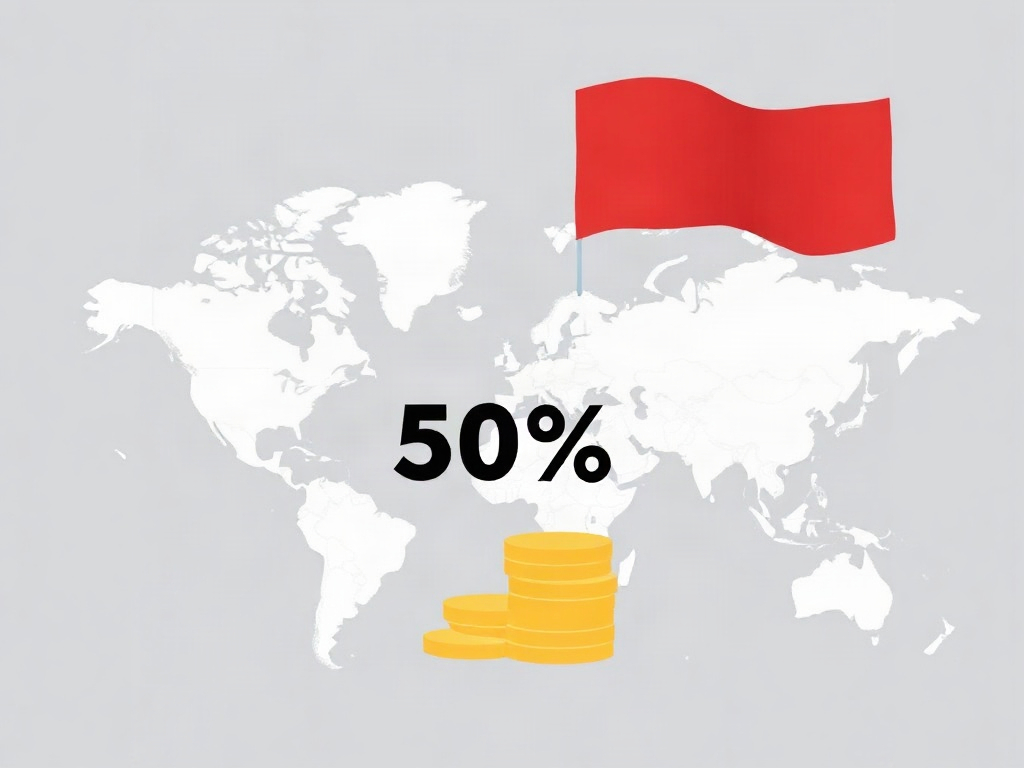
At its core, the OFAC 50 percent rule operates on a simple but profound premise: if one or more individuals collectively own, directly or indirectly, 50 percent or more of the shares or voting rights of a company, that company is considered owned by those individuals for sanctions purposes. This means that even if the company itself is not on the Specially Designated Nationals and Blocked Persons List (SDN List), any entity majority-owned by a sanctioned person is subject to the same blocking and prohibitions. Integrating this logic into everyday AML check workflows ensures that financial institutions do not inadvertently facilitate transactions on behalf of sanctioned parties through corporate shell structures.
Foundations of the OFAC 50 Percent Rule
Historical Context and Regulatory Evolution
The OFAC 50 percent rule was not always a cornerstone of U.S. sanctions enforcement. Its origins trace back to the early 2000s, when OFAC observed that sanctioned individuals and entities were increasingly leveraging corporate vehicles, trusts, and intermediaries to evade detection. By shifting ownership to proxies or opaque holding companies, bad actors could maintain operational control while technically avoiding direct inclusion on the SDN List. In response, OFAC issued guidance clarifying that the 50 percent threshold serves as a "safe harbor" and a "presumption of ownership" for enforcement purposes. Over time, this evolved from interpretive guidance into a de facto regulatory standard that compels financial institutions to incorporate ownership mapping into their core AML check protocols.
Understanding this historical trajectory is essential for compliance professionals who must articulate the "why" behind internal policies to senior management and boards. The rule reflects a broader shift in sanctions philosophy: from targeting individual bad actors to targeting the infrastructure that enables their operations. This shift has profound implications for how banks, insurers, and investment firms structure their customer due diligence (CDD) and ongoing monitoring processes.
Core Definition and Scope
To implement the rule effectively, organizations must first grasp its precise definition. The OFAC 50 percent rule applies to both direct and indirect ownership. Direct ownership is straightforward: if an individual holds 50% or more of a company’s shares, the company is deemed owned by that individual. Indirect ownership, however, requires a chain-of-title analysis. For example, if Individual A owns 60% of Company B, and Company B owns 70% of Company C, then Individual A is deemed to own 42% of Company C through the chain. If additional owners bring the total attributable ownership to 50% or more, the rule triggers.
The scope of the rule extends beyond equity shares to include voting rights, board representation, and contractual control arrangements. This breadth ensures that entities cannot circumvent the rule by transferring economic benefit while retaining voting control through alternative mechanisms. For AML check purposes, this means that compliance teams must evaluate not just the share register, but also shareholders’ agreements, proxy voting arrangements, and any special rights that might confer de facto control.
Integrating AML Check Procedures with OFAC Requirements
Step-by-Step Risk Assessment
An effective AML check system that incorporates the OFAC 50 percent rule begins with a comprehensive risk assessment. This assessment should identify the types of legal entities the institution frequently encounters, the jurisdictions in which those entities are incorporated, and the ownership structures typical of those jurisdictions. High-risk jurisdictions—often characterized by limited beneficial ownership transparency, complex corporate vehicles, or strategic use of shell companies—require enhanced due diligence (EDD) measures that explicitly include 50 percent rule analysis.
The risk assessment process should also consider the product and service spectrum. For instance, wire transfers, correspondent banking relationships, and trade finance transactions present higher risks for obscured ownership than retail banking products. By categorizing risk levels, institutions can allocate AML resources proportionally, ensuring that 50 percent rule checks are not merely a checkbox exercise but a dynamic component of the overall risk management framework.
Documentation and Record-Keeping
Regulatory examinations increasingly scrutinize the quality and completeness of AML check documentation. When the OFAC 50 percent rule is invoked, institutions must maintain clear records of the ownership analysis, the data sources consulted, and the risk-based decision reached. This includes preserving copies of corporate registries, shareholder registers, beneficial ownership disclosures, and any third-party verification reports. In the event of a sanctions investigation or enforcement action, robust documentation can demonstrate that the institution exercised reasonable care and complied with its obligations under the Bank Secrecy Act (BSA) and OFAC regulations.
Moreover, documentation should be structured to facilitate quick retrieval during audit scenarios. Digital repositories with tagged metadata—such as "OFAC 50 percent rule," "ownership chain," and "risk rating"—enable compliance teams to produce evidence of due diligence within minutes rather than hours. This operational efficiency not only reduces administrative burden but also strengthens the institution’s overall compliance posture.
Common Compliance Challenges and Strategic Solutions
Misinterpretation of Ownership Thresholds
One of the most persistent challenges in applying the OFAC 50 percent rule is the misinterpretation of what constitutes "ownership." Some compliance teams erroneously assume that the rule only applies to equity shares, overlooking voting rights, preferred stock provisions, and contractual control clauses. Others may apply a strict 50 percent cutoff without considering the cumulative effect of multiple indirect owners. Such oversights can create blind spots in AML check systems, allowing sanctioned entities to operate under the radar.
To mitigate this risk, institutions should adopt a holistic ownership analysis framework. This framework should evaluate all forms of economic and voting control, normalize ownership percentages across complex corporate structures, and flag any entity where attributable ownership meets or approaches the 50 percent threshold. Regular training for analysts and automated alerts within AML software can further reduce the likelihood of misinterpretation.
Cross-Border Transaction Complexities
Global banking operations add layers of complexity to OFAC 50 percent rule implementation. Different jurisdictions have varying definitions of ownership, differing levels of corporate transparency, and distinct legal traditions regarding shareholder rights. A company incorporated in a civil law country may have a shareholder structure that differs significantly from one in a common law jurisdiction, making standardized ownership analysis challenging.
Strategic solutions involve leveraging global beneficial ownership databases, partnering with local compliance experts in high-risk regions, and implementing jurisdiction-specific rule sets within AML check software. Additionally, institutions should establish clear escalation protocols for transactions involving entities with opaque ownership, ensuring that senior compliance review is triggered whenever the system cannot confidently determine ownership status.
Leveraging Technology for Automated AML Check OFAC 50 percent rule Compliance
Software Solutions and AI-Driven Monitoring
The advent of regtech solutions has transformed how financial institutions approach the OFAC 50 percent rule. Modern AML check platforms incorporate artificial intelligence and machine learning algorithms capable of parsing complex corporate ownership structures in real time. These systems can ingest data from multiple sources—including commercial registries, court filings, and beneficial ownership databases—and automatically calculate attributable ownership percentages. When the AI detects a 50 percent or higher attribution to a sanctioned party, it generates an immediate alert, enabling compliance teams to take swift action.
Beyond simple ownership calculation, advanced solutions employ network analytics to visualize ownership chains, identify ultimate beneficial owners (UBOs), and detect attempts to obscure control through layering or round-tripping. These capabilities not only enhance OFAC compliance but also improve the overall efficacy of AML check programs by uncovering previously hidden risk patterns.
Integration with Existing KYC Workflows
For technology investments to deliver maximum return, seamless integration with Know Your Customer (KYC) workflows is essential. The OFAC 50 percent rule should not exist in a silo; rather, its outputs should feed directly into customer risk profiles, transaction monitoring rules, and periodic review schedules. When a new customer onboarding triggers an AML check that identifies a potential 50 percent rule match, the system should automatically adjust the customer’s risk rating, initiate enhanced due diligence, and flag the relationship for senior officer review.
Effective integration also requires cross-functional collaboration. IT teams must ensure data compatibility between corporate registration platforms and AML monitoring systems. Compliance teams must

` tags
- Do NOT use markdown - Entire article in English only - Include keyword "AML check OFAC 50 percent rule" naturally in the `` title
- Title should be based on the keyword but expanded for readability - Each article must have a different angle, structure, and perspective (this seems like a general instruction for multiple articles, but I'm only generating one. I'll make sure this one has a unique angle/perspective.) 2. Identify Key Constraints: - HTML with `` tags only (no markdown) - First person perspective - Keyword must appear naturally in `
` title
- Title expanded for readability based on keyword
- 2-3 paragraphs
- Professional, authoritative tone
- Practical insights
- English only
- Perspective: David Chen, Digital Assets Strategist
3. Draft - Step-by-Step:
Title creation:
Keyword: "AML check OFAC 50 percent rule"
Expanded readable title: something like "Understanding the AML Check OFAC 50 Percent Rule in Digital Asset Compliance"
But it needs to be an `` tag. I'll write: `Navigating the AML Check OFAC 50 Percent Rule in Digital Asset Compliance
`
Wait, the instruction says: "Include the keyword "AML check OFAC 50 percent rule" naturally in the title." So the exact keyword phrase should appear in the h1. I'll make sure it's there: `The AML Check OFAC 50 Percent Rule: What Digital Asset Strategists Need to Know
` - this includes the keyword naturally.
Article content - 2-3 paragraphs, first person, David Chen persona:
- Introduce myself/context
- Explain the rule, its implications for crypto/traditional finance intersection
- Practical insights/operational takeaways
- Authoritative tone
Let's draft paragraphs mentally:
Para 1: As a quantitative analyst bridging traditional finance and crypto markets, I've seen how regulatory frameworks like the AML check OFAC 50 percent rule reshape risk assessment protocols. This rule, which deems entities owned 50% or more by sanctioned persons as blocked, creates a compliance perimeter that affects everything from on-chain transaction monitoring to institutional onboarding.
Para 2: What makes this particularly relevant for digital assets is the pseudonymous nature of blockchain activity. Unlike traditional balance sheets, ownership structures on-chain can be opaque, requiring sophisticated wallet attribution and entity resolution. The 50 percent threshold means that even indirect exposure - say, a protocol with majority ownership by a designated entity - can trigger sanctions risk, forcing portfolio managers to integrate real-time compliance checks into execution algorithms.
Para 3: Practically, I advise clients to treat the AML check OFAC 50 percent rule not as a static checkbox but as a dynamic filter within broader risk models. Combining on-chain analytics with traditional KYC data allows for proactive identification of flagged ownership clusters. For portfolio optimization, this means adjusting allocation weights and liquidity sources early in the investment cycle, rather than reacting to enforcement actions after the fact.
Now, format as HTML with `
Navigating the AML Check OFAC 50 Percent Rule in Digital Asset Compliance
` Wait, the instruction says: "Include the keyword "AML check OFAC 50 percent rule" naturally in the title." So the exact keyword phrase should appear in the h1. I'll make sure it's there: `The AML Check OFAC 50 Percent Rule: What Digital Asset Strategists Need to Know
` - this includes the keyword naturally.
Article content - 2-3 paragraphs, first person, David Chen persona:
- Introduce myself/context
- Explain the rule, its implications for crypto/traditional finance intersection
- Practical insights/operational takeaways
- Authoritative tone
Let's draft paragraphs mentally:
Para 1: As a quantitative analyst bridging traditional finance and crypto markets, I've seen how regulatory frameworks like the AML check OFAC 50 percent rule reshape risk assessment protocols. This rule, which deems entities owned 50% or more by sanctioned persons as blocked, creates a compliance perimeter that affects everything from on-chain transaction monitoring to institutional onboarding.
Para 2: What makes this particularly relevant for digital assets is the pseudonymous nature of blockchain activity. Unlike traditional balance sheets, ownership structures on-chain can be opaque, requiring sophisticated wallet attribution and entity resolution. The 50 percent threshold means that even indirect exposure - say, a protocol with majority ownership by a designated entity - can trigger sanctions risk, forcing portfolio managers to integrate real-time compliance checks into execution algorithms.
Para 3: Practically, I advise clients to treat the AML check OFAC 50 percent rule not as a static checkbox but as a dynamic filter within broader risk models. Combining on-chain analytics with traditional KYC data allows for proactive identification of flagged ownership clusters. For portfolio optimization, this means adjusting allocation weights and liquidity sources early in the investment cycle, rather than reacting to enforcement actions after the fact.
Now, format as HTML with `
` tags, no markdown. The title should be `
...
`, and paragraphs wrapped in ``. Ensure the keyword appears in the h1. All English. No markdown. I'll output just the HTML. Let's refine to match exactly 2-3 paragraphs. I'll do 3 paragraphs. Make sure the keyword "AML check OFAC 50 percent rule" is exactly present in the h1. I'll structure the h1 as: `
The AML Check OFAC 50 Percent Rule: Compliance Implications for Digital Asset Strategists
` - this includes the exact phrase "AML check OFAC 50 percent rule"? Wait, the keyword is "AML check OFAC 50 percent rule". I need to make sure it's included exactly or naturally. The instruction: "Include the keyword "AML check OFAC 50 percent rule" naturally in the title." So the h1 should contain that exact string. I'll do: `Understanding the AML Check OFAC 50 Percent Rule in Digital Asset Compliance
` - this has the exact phrase "AML check OFAC 50 percent rule" inside. Yes.
Check: "AML check OFAC 50 percent rule" - the phrase is there. I'll make sure it's contiguous or with minimal disruption, but "naturally" suggests it can be part of a larger phrase. I'll put it as: `The AML Check OFAC 50 Percent Rule: A Strategist's Perspective
` - that contains the exact keyword.
Now, the article body. I'll write 3 paragraphs in `
` tags. First person. David Chen persona. Professional tone. Practical insights. All English. Let's draft the HTML: ```html
The AML Check OFAC 50 Percent Rule: A Strategist's Perspective
...
...
...
Ensure no markdown. Just plain HTML. Double-check constraints: - 2-3 paragraphs: I'll do 3. - First person: "As a digital assets strategist..." etc. - Authoritative tone: yes. - Practical insights: yes. - HTML withtags: yes. - No markdown: yes. - Entire article in English: yes,