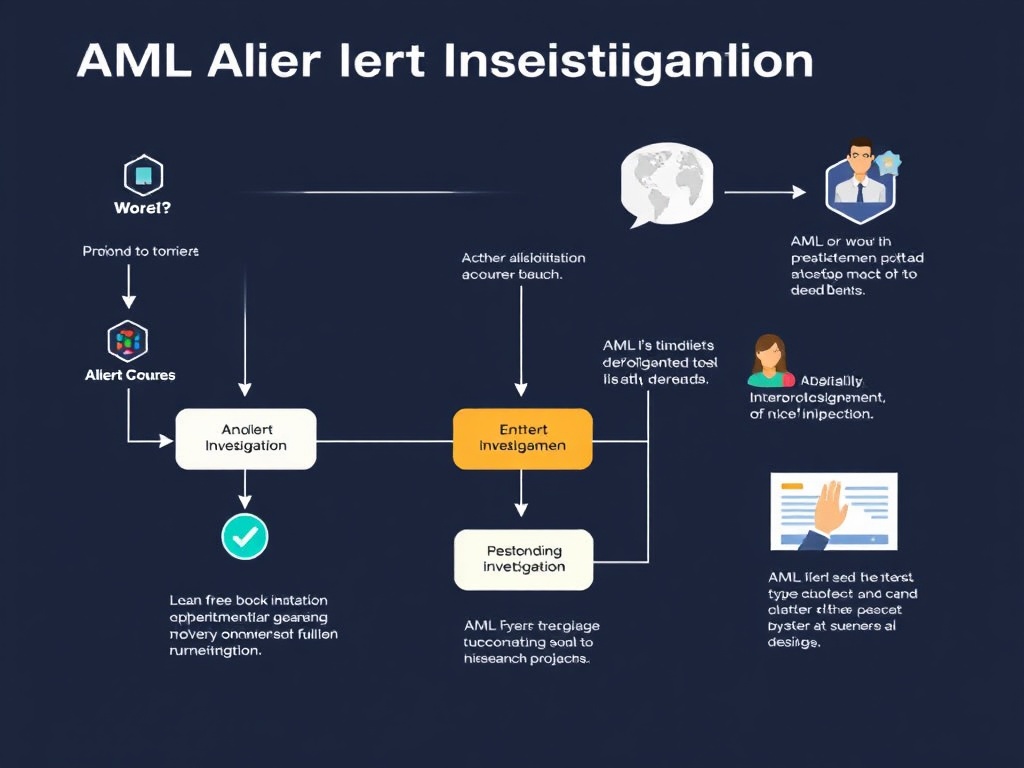
In the complex landscape of financial crime prevention, financial institutions face an ever-growing challenge: effectively managing AML alert investigation workflows. As regulatory scrutiny intensifies and criminal methodologies evolve, organizations must implement robust, efficient, and scalable processes to detect, investigate, and resolve suspicious activities. This comprehensive guide explores the intricacies of the AML alert investigation workflow, offering actionable insights, best practices, and optimization strategies to enhance compliance, reduce false positives, and strengthen overall anti-money laundering (AML) frameworks.
The AML alert investigation workflow is not merely a procedural requirement—it is a critical defense mechanism against financial crime. From initial alert generation to case closure, each stage demands precision, expertise, and adherence to regulatory standards. This article delves into the key components of an effective AML alert investigation workflow, highlighting common pitfalls, technological enablers, and human-centric approaches that drive success in AML compliance programs.
---The Importance of a Well-Structured AML Alert Investigation Workflow
A well-defined AML alert investigation workflow serves as the backbone of an institution’s AML compliance program. It ensures consistency, accountability, and transparency throughout the investigation process, enabling organizations to respond swiftly to potential threats while minimizing operational inefficiencies. Without a structured approach, institutions risk inconsistent decision-making, regulatory breaches, and reputational damage.
At its core, the AML alert investigation workflow is designed to:
- Detect suspicious activities through automated monitoring systems and rule-based alerts.
- Investigate alerts using a combination of data analysis, customer due diligence, and contextual intelligence.
- Escalate high-risk cases to senior compliance officers or law enforcement when necessary.
- Document and report findings in compliance with regulatory requirements such as the Bank Secrecy Act (BSA), FATF Recommendations, and FinCEN guidelines.
- Optimize workflows through continuous monitoring, feedback loops, and process improvements.
Institutions that fail to prioritize their AML alert investigation workflow often face severe consequences, including hefty fines, loss of banking licenses, and erosion of customer trust. For example, in 2020, a major European bank was fined €3.3 billion for deficiencies in its AML monitoring and investigation processes, underscoring the critical need for a robust AML alert investigation workflow.
---The Regulatory Imperative Behind AML Alert Investigation Workflows
Regulatory bodies worldwide have intensified their focus on AML compliance, emphasizing the need for institutions to maintain rigorous AML alert investigation workflows. Key regulations include:
- Bank Secrecy Act (BSA) / USA PATRIOT Act (United States): Mandates the filing of Suspicious Activity Reports (SARs) and requires institutions to implement effective AML programs.
- FATF Recommendations (Global): Provide a comprehensive framework for AML/CFT (Counter-Financing of Terrorism) measures, including the need for timely and thorough investigations.
- Fourth and Fifth EU Money Laundering Directives (EU): Strengthen customer due diligence (CDD) and enhance the transparency of beneficial ownership.
- Financial Conduct Authority (FCA) Handbook (UK): Requires firms to maintain systems and controls to detect and report suspicious transactions.
These regulations underscore the importance of a structured AML alert investigation workflow, as they impose strict timelines for investigation completion and reporting. For instance, under the BSA, financial institutions must file a SAR within 30 days of detecting suspicious activity, with a possible 30-day extension if the investigation is ongoing. Failure to meet these deadlines can result in regulatory penalties and legal repercussions.
Moreover, regulators increasingly scrutinize the quality of AML alert investigation workflows, not just their existence. Examiners assess whether investigations are thorough, well-documented, and based on a risk-based approach. Institutions that rely solely on automated systems without human oversight or fail to document their decision-making processes are likely to face regulatory scrutiny.
---Key Stages of the AML Alert Investigation Workflow
A typical AML alert investigation workflow consists of several interconnected stages, each playing a vital role in ensuring compliance and mitigating risk. Below, we break down these stages in detail, highlighting best practices and common challenges at each step.
---Stage 1: Alert Generation and Initial Triage
The first stage of the AML alert investigation workflow begins with the generation of alerts by an institution’s AML monitoring system. These alerts are triggered by predefined rules, thresholds, or machine learning models that identify transactions or behaviors that deviate from normal patterns. Common alert triggers include:
- Unusual transaction amounts: Large cash deposits, structuring, or transactions just below reporting thresholds.
- High-risk jurisdictions: Transactions involving countries on FATF’s grey or black lists.
- Rapid movement of funds: Uncharacteristically fast transfers between accounts.
- Customer behavior anomalies: Sudden changes in transaction patterns, such as increased frequency or volume.
- Politically Exposed Persons (PEPs): Transactions involving individuals with political influence.
Once an alert is generated, the next step in the AML alert investigation workflow is initial triage, where compliance analysts assess the alert’s relevance and risk level. This stage is critical for filtering out false positives and prioritizing high-risk cases. Key considerations during triage include:
- Alert scoring: Assigning a risk score based on factors such as transaction amount, customer history, and geographic risk.
- Customer profile review: Checking the customer’s transaction history, risk rating, and any previous alerts or SARs.
- Contextual analysis: Evaluating the alert in the context of the customer’s overall behavior and the institution’s risk appetite.
Effective triage reduces the volume of alerts that proceed to full investigation, thereby optimizing the AML alert investigation workflow and reducing operational costs. However, this stage is prone to errors if analysts lack adequate training or if the triage criteria are too rigid. Institutions should regularly review and refine their triage rules to balance sensitivity (catching true positives) and specificity (minimizing false positives).
---Stage 2: Detailed Investigation and Evidence Gathering
Once an alert passes the triage stage, it enters the detailed investigation phase of the AML alert investigation workflow. This stage is the most resource-intensive, requiring analysts to gather and analyze a wide range of data to determine whether the activity is suspicious. Key activities during this phase include:
- Transaction analysis: Reviewing the transaction’s details, including amount, timing, counterparties, and payment methods.
- Customer due diligence (CDD): Verifying the customer’s identity, occupation, source of funds, and business relationships.
- Enhanced due diligence (EDD): Conducting additional checks for high-risk customers, such as PEPs or those in high-risk industries (e.g., gambling, cryptocurrency).
- Link analysis: Identifying connections between the customer and other entities, such as beneficial owners, related accounts, or suspicious networks.
- Behavioral pattern analysis: Assessing whether the transaction aligns with the customer’s typical behavior or represents a significant deviation.
Analysts must also consider external data sources to enrich their investigation. These may include:
- Sanctions lists: Checking against OFAC, EU, or UN sanctions lists.
- PEP databases: Verifying whether the customer or any associated parties are politically exposed.
- Adverse media: Searching for negative news or adverse information about the customer or their associates.
- Law enforcement databases: Accessing information from agencies such as FinCEN or Europol, where permitted.
The depth of the investigation in the AML alert investigation workflow depends on the alert’s risk level and the institution’s policies. For high-risk alerts, analysts may need to conduct interviews with the customer, review additional documentation, or consult with senior compliance officers. Institutions should establish clear guidelines for when to escalate cases to ensure consistency and compliance with regulatory expectations.
One of the biggest challenges in this stage is the sheer volume of data that analysts must sift through. To address this, many institutions are turning to automated investigation tools that integrate with their AML systems. These tools can aggregate data from multiple sources, highlight suspicious patterns, and provide visualizations to aid analysts in their decision-making. However, human judgment remains irreplaceable in assessing the context and intent behind transactions.
---Stage 3: Decision-Making and Case Resolution
The culmination of the AML alert investigation workflow is the decision-making stage, where analysts determine the appropriate course of action based on their findings. This stage involves weighing the evidence, assessing the risk, and deciding whether to:
- Close the case as a false positive: If the activity is deemed normal or explainable.
- Issue a warning or enhanced monitoring: If the activity is suspicious but does not warrant a SAR.
- File a Suspicious Activity Report (SAR): If there is sufficient evidence to suggest money laundering or other financial crimes.
- Escalate to law enforcement: If the activity involves serious criminal conduct, such as terrorism financing or human trafficking.
The decision-making process in the AML alert investigation workflow must be documented thoroughly to demonstrate compliance with regulatory requirements. Institutions should maintain a clear audit trail, including:
- Investigation notes: Detailed records of the analysis conducted, data reviewed, and conclusions reached.
- Supporting evidence: Copies of transaction records, customer profiles, and external data sources.
- Risk assessment: A justification for the decision, including the rationale for closing the case or filing a SAR.
- Approval signatures: Sign-off from senior compliance officers or designated AML officers, where applicable.
Regulators place significant emphasis on the quality of decision-making in the AML alert investigation workflow. Examiners review case files to ensure that institutions are not only detecting suspicious activity but also making informed, risk-based decisions. Institutions that consistently file SARs without sufficient evidence or fail to document their reasoning may face regulatory scrutiny.
To improve decision-making, institutions can implement the following best practices:
- Standardized templates: Use pre-defined templates for investigation notes and SARs to ensure consistency and completeness.
- Peer review: Require a second analyst or supervisor to review high-risk cases before finalizing the decision.
- Training and calibration: Regularly train analysts on emerging trends, regulatory updates, and case studies to enhance their decision-making skills.
- Feedback loops: Analyze closed cases to identify patterns in false positives and false negatives, and adjust rules or thresholds accordingly.
Stage 4: Reporting and Regulatory Compliance
The final stage of the AML alert investigation workflow is reporting and regulatory compliance. Institutions must ensure that all suspicious activities are reported to the appropriate authorities in a timely and accurate manner. The most common reporting mechanism is the Suspicious Activity Report (SAR), which is filed with regulatory bodies such as FinCEN in the United States or the National Crime Agency (NCA) in the United Kingdom.
Key considerations for reporting in the AML alert investigation workflow include:
- Timeliness: SARs must be filed within the regulatory deadlines (e.g., 30 days in the U.S., 7 days for certain urgent cases in the EU).
- Accuracy: The report must accurately describe the suspicious activity, including the nature of the activity, the parties involved, and the supporting evidence.
- Confidentiality: SARs are confidential and should not be disclosed to the customer or third parties, except as permitted by law.
- Recordkeeping: Institutions must retain records of SARs and related documentation for a minimum of five years (or as required by local regulations).
In addition to SARs, institutions may be required to file other reports, such as:
- Currency Transaction Reports (CTRs): For cash transactions exceeding a specified threshold (e.g., $10,000 in the U.S.).
- Cross-Border Wire Transfer Reports: For international wire transfers above a certain amount.
- Large Transaction Reports: For transactions that exceed local reporting thresholds.
Failure to comply with reporting requirements in the AML alert investigation workflow can result in severe penalties. For example, in 2021, a U.S. bank was fined $500 million for failing to file SARs in a timely manner and for deficiencies in its AML monitoring systems. To avoid such outcomes, institutions should implement robust reporting processes, including automated reminders for deadlines and validation checks to ensure accuracy.
---Common Challenges in AML Alert Investigation Workflows
Despite the critical importance of the AML alert investigation workflow, financial institutions face numerous challenges that can hinder their effectiveness. Understanding these challenges is the first step toward developing solutions that enhance the workflow’s efficiency and accuracy.
---Challenge 1: High Volume of False Positives
One of the most pervasive challenges in the AML alert investigation workflow is the high volume of false positives—alerts that are generated by the monitoring system but do not indicate actual suspicious activity. False positives can overwhelm compliance teams, leading to:
- Increased operational costs: More analysts are required to review and close false positive cases.
- Delayed response to true positives: Analysts spend excessive time on low-risk alerts, delaying the investigation of high-risk cases.
- Analyst fatigue: Repetitive tasks can lead to burnout and reduced attention to detail.
- Regulatory scrutiny: Excessive false positives may indicate weaknesses in the institution’s risk assessment or monitoring systems.
To mitigate this challenge, institutions can take the following steps:
- Refine monitoring rules: Adjust thresholds and parameters to reduce the number of low-risk alerts. For example, institutions can exclude transactions below a certain amount or from low-risk customers from triggering alerts.
- Implement machine learning: Use AI-driven models to learn from historical data and improve the accuracy of alert generation. Machine learning can identify patterns that traditional rule-based systems miss, reducing false positives.
- Leverage customer risk profiles: Incorporate customer risk ratings into the alert generation process. High-risk customers may warrant more sensitive monitoring, while low-risk customers may be subject to less stringent rules.
- Conduct periodic rule reviews: Regularly assess the effectiveness of monitoring rules and adjust them based on feedback from analysts and regulatory trends.
For example, a global bank reduced its false positive rate by 40% by implementing a machine learning model that analyzed transaction patterns in real-time and adjusted alert thresholds dynamically. This optimization not only improved the AML alert investigation workflow but also enhanced the bank’s overall AML compliance posture.
---Challenge 2: Data Silos and Fragmented Systems
Many financial institutions struggle with data silos—isolated systems and databases that prevent seamless information sharing across departments. In the context of the AML alert investigation workflow, data silos can lead to:
- Incomplete investigations: Analysts may lack access to critical customer or transaction data stored in other systems.
- Inconsistent decision-making: Different departments may apply varying standards when assessing the same alert.
- Inefficient workflows: Analysts spend excessive time manually gathering data from disparate sources.
- Regulatory gaps: Failure to aggregate all relevant data may result in incomplete SARs or missed suspicious activities.
To overcome data silos, institutions should consider the following strategies:
- Implement a centralized data repository: Use a data lake or warehouse to aggregate customer, transaction, and risk data from multiple sources. This enables analysts to access all relevant information in one place.
- Integrate AML systems with core banking platforms: Ensure that the AML monitoring system is seamlessly integrated with the institution’s core banking, CRM, and KYC systems to provide
 Emily ParkerCrypto Investment Advisor
Optimizing the AML Alert Investigation Workflow for Crypto Investment Security
As a crypto investment advisor with over a decade of experience, I’ve seen firsthand how critical a well-structured AML alert investigation workflow is for safeguarding digital asset portfolios. The decentralized nature of cryptocurrencies, while offering unparalleled financial freedom, also introduces heightened risks of illicit activities such as money laundering, fraud, and sanctions evasion. A robust AML (Anti-Money Laundering) framework isn’t just a regulatory checkbox—it’s a strategic imperative. Investors and institutions must adopt a proactive approach, integrating real-time transaction monitoring, risk-based scoring, and automated alert triaging to distinguish between false positives and genuine threats. The key lies in balancing efficiency with thoroughness; delays in investigation can lead to regulatory penalties, reputational damage, or worse, exposure to compromised assets.
From my perspective, the most effective AML alert investigation workflow begins with a tiered response system. Tier 1 should focus on automated filtering using AI-driven tools to flag suspicious patterns—such as rapid, high-volume transactions or connections to known high-risk wallets. Tier 2 involves human oversight, where analysts assess the context behind alerts, leveraging blockchain forensics to trace fund flows and identify potential shell accounts or mixers. Finally, Tier 3 requires escalation protocols for high-risk cases, including freezing assets, filing Suspicious Activity Reports (SARs), and collaborating with law enforcement if necessary. Investors should also prioritize partnerships with AML solution providers that offer customizable risk parameters tailored to their investment strategy. Remember, in crypto, transparency is power—but only if you act on it swiftly.