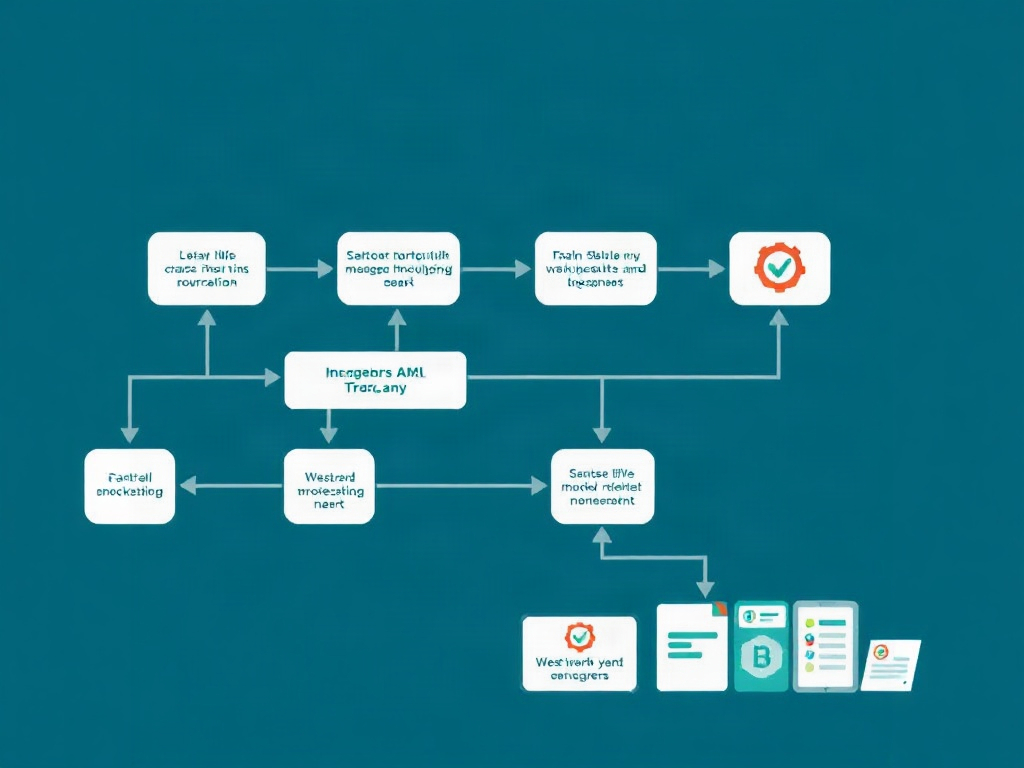
Foundations of the AML check alert triage workflow
Definition and scope
An AML check alert triage workflow serves as the backbone of any modern anti‑money laundering (AML) program. It defines how financial institutions receive, assess, and prioritize alerts generated by monitoring systems before they are escalated for deeper investigation. The workflow is not a one‑size‑fits‑all process; rather, it is a flexible framework that can be tailored to the size of the institution, the complexity of its product suite, and the regulatory expectations of its jurisdiction. By establishing clear criteria for what constitutes a high‑risk alert, organizations can reduce false positives, accelerate legitimate case handling, and maintain compliance with FinCEN, EU AML Directives, and other global standards.
Regulatory context
Regulators worldwide require that institutions demonstrate a systematic approach to handling suspicious activity reports (SARs). The AML check alert triage workflow must align with these expectations by documenting each decision point, preserving audit trails, and ensuring that risk‑based thresholds are consistently applied. Failure to meet these standards can result in enforcement actions, fines, or reputational damage. Consequently, a well‑designed workflow not only protects the organization from legal exposure but also enhances its ability to detect sophisticated laundering schemes that might otherwise slip through unnoticed.
Key components of an effective AML check alert triage workflow
Alert ingestion and prioritization
The first stage of any AML check alert triage workflow involves the systematic capture of alerts from multiple sources, such as transaction monitoring engines, customer onboarding screens, and external data feeds. Each alert is assigned a risk score based on factors like transaction amount, geographic risk, counterparties, and product type. Strong emphasis is placed on automating the scoring process to ensure consistency, while still allowing manual overrides when anomalous patterns suggest a need for deeper scrutiny.
Investigation protocols
Once an alert has been prioritized, investigators follow a standardized protocol that typically includes:
- Initial review – confirming that the alert is valid and not a duplicate.
- Data enrichment – pulling additional context from internal and external sources.
- Risk assessment – applying predefined thresholds to decide whether the case proceeds to full investigation or is closed.
- Documentation – recording all findings in the case management system for auditability.
These steps are designed to be repeatable and scalable, enabling compliance teams to handle high volumes of alerts without sacrificing analytical depth.
Best practices for seamless AML check alert triage workflow integration
Technology stack considerations
Implementing an efficient AML check alert triage workflow often hinges on the underlying technology stack. Key components include:
- Real‑time monitoring engines capable of ingesting large data volumes.
- Risk scoring models that leverage machine learning to improve accuracy over time.
- Case management platforms that support workflow automation, audit trails, and reporting.
- Secure data integration points for external watchlists and sanctions screening.
Choosing the right combination of tools reduces manual effort, minimizes latency, and ensures that the workflow remains adaptable to evolving regulatory requirements.
Training and collaboration
Even the most sophisticated technology cannot compensate for a lack of skilled personnel. Effective AML check alert triage workflow implementation requires:
- Regular training sessions that cover new alert types, emerging typologies, and updates to scoring algorithms.
- Cross‑functional collaboration between compliance, risk, IT, and business units to share insights and refine thresholds.
- Clear role definitions that prevent duplication of effort and ensure accountability at each stage.
By fostering a culture of continuous learning and teamwork, organizations can keep their triage processes both robust and agile.
Measuring success and continuous improvement in the AML check alert triage workflow
Key performance indicators
To gauge the effectiveness of an AML check alert triage workflow, institutions should track a set of quantifiable metrics, such as:
- Alert volume per day and the percentage that are escalated for further review.
- Average time from alert receipt to final disposition.
- Rate of false positives versus true positives.
- Number of SARs filed per month and their outcomes.
- Compliance audit findings related to workflow adherence.
Analyzing these KPIs on a regular basis helps identify bottlenecks, highlight areas for automation, and demonstrate progress to senior leadership and regulators.
Feedback loops
Continuous improvement is achieved through systematic feedback mechanisms. After each case is closed, investigators should:
- Document any challenges encountered during the review.
- Provide suggestions for refining scoring parameters or investigation steps.
- Share lessons learned with the broader compliance team.
These insights are then fed back into the workflow design, allowing the AML check alert triage workflow to evolve in response to new typologies, regulatory updates, and technological advances. A disciplined feedback loop ensures that the workflow remains not only compliant but also increasingly efficient over time.
In summary, mastering the AML check alert triage workflow is essential for any financial institution that seeks to protect itself from illicit financial activity while meeting stringent regulatory expectations. By grounding the process in clear definitions, robust technology, and a culture of continuous improvement, organizations can transform a potentially overwhelming volume of alerts into a streamlined, high‑impact compliance engine.

AML Check Alert Triage Workflow: A Digital Assets Strategist's Perspective
As David Chen, a quantitative analyst specializing in traditional finance and cryptocurrency markets, I view the AML check alert triage workflow as a critical bridge between compliance and market efficiency. In my daily practice, I treat each alert not as an isolated flag but as a data point that must be contextualized within broader on‑chain activity and portfolio exposure.
Practically, I prioritize alerts by integrating real‑time risk scores with liquidity metrics and transaction patterns, allowing me to triage high‑impact cases while filtering out noise. Leveraging on‑chain analytics, I map flagged addresses to known illicit clusters, assess the velocity of fund movement, and align these insights with my portfolio’s risk budget, ensuring that compliance actions do not unduly disrupt market positioning.
Ultimately, a well‑structured AML check alert triage workflow empowers me to make informed, timely decisions that protect the integrity of digital asset operations without sacrificing strategic agility. By continuously refining the workflow with empirical data and market feedback, I maintain a proactive stance against financial crime while preserving the innovative edge of crypto‑centric investments.