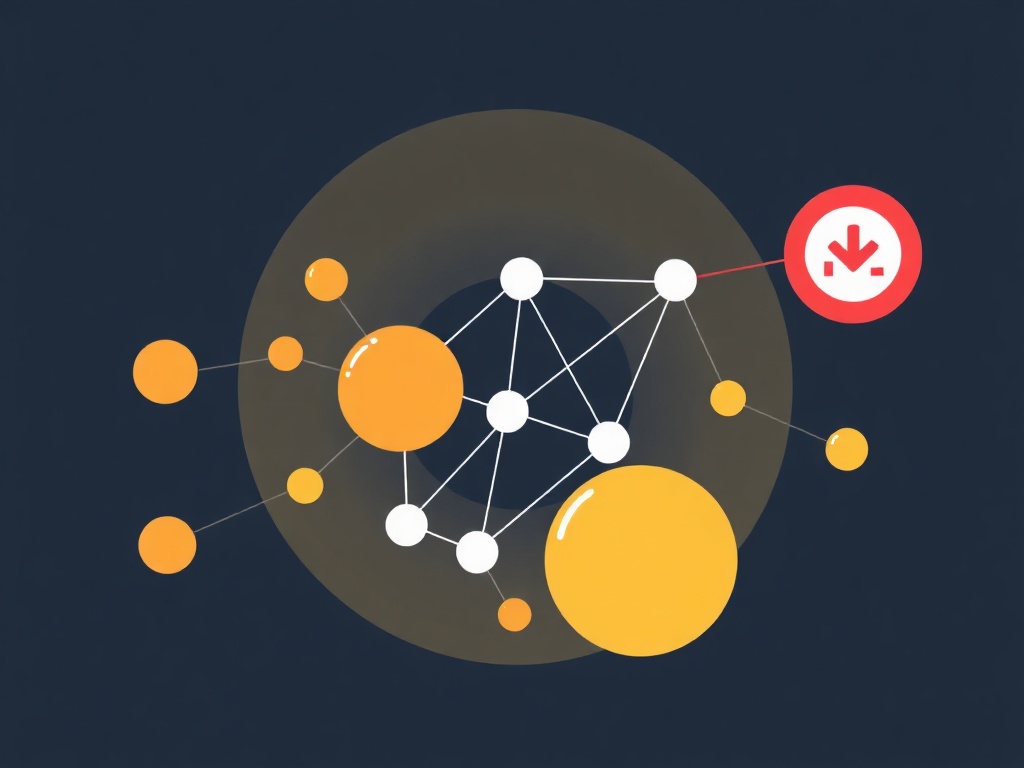
The AML check graph clustering algorithm represents a cutting-edge approach in the fight against financial crime, particularly money laundering. As regulatory bodies worldwide tighten their scrutiny on financial transactions, institutions are increasingly turning to advanced technological solutions to enhance their anti-money laundering (AML) compliance programs. Among these solutions, graph-based clustering algorithms have emerged as a powerful tool for detecting suspicious patterns and relationships that traditional rule-based systems often miss.
This article explores the intricacies of the AML check graph clustering algorithm, its underlying principles, implementation challenges, and real-world applications. By the end, you'll have a thorough understanding of how this sophisticated technique can transform your AML compliance strategy.
The Fundamentals of AML and Graph-Based Approaches
What is Anti-Money Laundering (AML)?
Anti-Money Laundering refers to a set of procedures, laws, and regulations designed to prevent criminals from disguising illegally obtained funds as legitimate income. The process typically involves:
- Placement: Introducing illicit funds into the financial system
- Layering: Concealing the source of funds through complex transactions
- Integration: Making illicit funds appear legitimate
Financial institutions are legally required to implement AML programs that include customer due diligence, transaction monitoring, and suspicious activity reporting. However, traditional AML systems often struggle with the sheer volume of data and the sophistication of modern money laundering techniques.
Why Graph Theory is Revolutionizing AML Compliance
Graph theory provides a mathematical framework for modeling relationships between entities as nodes and edges. In the context of AML, this translates to:
- Nodes: Representing entities such as bank accounts, customers, or transactions
- Edges: Representing relationships or transactions between these entities
The AML check graph clustering algorithm leverages these relationships to identify suspicious patterns that might indicate money laundering activities. Unlike traditional methods that examine transactions in isolation, graph-based approaches consider the entire network of connections, revealing hidden relationships that would otherwise go unnoticed.
Deep Dive into the AML Check Graph Clustering Algorithm
The Core Components of Graph Clustering in AML
The AML check graph clustering algorithm typically consists of several key components:
- Graph Construction:
- Data Collection: Gathering transaction data, customer information, and other relevant financial data
- Graph Modeling: Representing entities as nodes and transactions as edges with appropriate weights
- Graph Enrichment: Incorporating additional data sources such as watchlists, PEP (Politically Exposed Persons) databases, and geographic information
- Preprocessing:
- Data Cleaning: Removing duplicates, handling missing values, and standardizing formats
- Feature Engineering: Creating meaningful features from raw data that can be used by the clustering algorithm
- Graph Simplification: Reducing the complexity of the graph while preserving important structural information
- Clustering Algorithm Selection:
- Community Detection: Identifying groups of nodes that are more densely connected to each other than to the rest of the graph
- Anomaly Detection: Flagging nodes or subgraphs that deviate significantly from expected patterns
- Hybrid Approaches: Combining multiple techniques to improve detection accuracy
- Post-Processing:
- Alert Generation: Creating actionable alerts for compliance officers
- Explainability: Providing interpretable explanations for why certain patterns were flagged
- Feedback Loop: Incorporating human feedback to refine the model over time
Popular Graph Clustering Techniques for AML
Several graph clustering algorithms have proven effective in AML applications:
- Louvain Method: A hierarchical clustering algorithm that optimizes modularity to detect communities in large networks. Particularly useful for identifying tightly-knit groups of accounts that might be involved in coordinated money laundering schemes.
- Label Propagation: A semi-supervised learning technique that propagates labels through the graph based on node relationships. Effective for identifying similar accounts or transactions that share common characteristics with known suspicious entities.
- Spectral Clustering: Uses the eigenvalues of the graph's adjacency matrix to perform dimensionality reduction before clustering. Particularly effective for detecting subtle patterns in complex transaction networks.
- Deep Learning Approaches: Recent advances in graph neural networks (GNNs) have enabled more sophisticated clustering techniques that can learn complex patterns directly from the graph structure.
The choice of algorithm depends on factors such as the size of the graph, the nature of the data, and the specific AML use case. Many institutions implement a multi-layered approach, combining several techniques to maximize detection capabilities.
Implementing the AML Check Graph Clustering Algorithm
Data Requirements and Preparation
To effectively implement the AML check graph clustering algorithm, financial institutions must gather comprehensive data from multiple sources:
- Transaction Data: All financial transactions including amounts, timestamps, account numbers, and counterparties
- Customer Information: KYC (Know Your Customer) data, including identity documents, beneficial ownership information, and risk profiles
- Watchlist Data: Sanctions lists, PEP databases, and other regulatory lists
- Geographic Data: Location information for both parties in a transaction
- Behavioral Data: Historical transaction patterns and customer behavior profiles
Data Quality Considerations:
- Ensure data completeness and accuracy
- Handle missing values appropriately (imputation, exclusion, or flagging)
- Standardize formats across different data sources
- Implement robust data governance procedures
Technical Implementation Steps
- Graph Database Selection:
Choose an appropriate graph database technology based on your institution's needs:
- Neo4j: Popular open-source graph database with strong community support
- Amazon Neptune: Fully managed graph database service
- ArangoDB: Multi-model database that supports graph operations
- TigerGraph: Enterprise-grade graph analytics platform
- Graph Construction:
Build the graph representation of your financial data:
- Create nodes for accounts, customers, transactions, and other entities
- Establish edges representing relationships and transactions
- Assign appropriate weights to edges based on transaction amounts, frequencies, or other relevant factors
- Consider temporal aspects by incorporating time-based edges or dynamic graph representations
- Algorithm Implementation:
Select and implement the appropriate clustering algorithm:
- For large-scale graphs, consider distributed implementations of Louvain or Label Propagation
- For smaller, more focused investigations, spectral clustering or deep learning approaches may be more appropriate
- Implement appropriate thresholds for cluster size, density, or other metrics that indicate suspicious activity
- Integration with Existing Systems:
Ensure seamless integration with your institution's AML compliance framework:
- Connect with transaction monitoring systems
- Interface with case management platforms
- Provide APIs for real-time alert generation
- Implement feedback mechanisms to improve model performance over time
Performance Optimization Techniques
To maximize the effectiveness of your AML check graph clustering algorithm, consider the following optimization strategies:
- Graph Partitioning: Divide large graphs into smaller subgraphs that can be processed independently, then combine results
- Approximate Algorithms: Use algorithms that provide near-optimal solutions with reduced computational complexity
- Parallel Processing: Leverage distributed computing frameworks like Apache Spark or Dask to process large graphs efficiently
- Incremental Updates: Implement mechanisms to update the graph and clustering results as new data becomes available
- Feature Selection: Focus on the most informative features to reduce computational overhead while maintaining detection accuracy
Real-World Applications and Case Studies
Detecting Structured Transaction Networks
One of the most common applications of the AML check graph clustering algorithm is identifying structured transaction networks, where criminals break large transactions into smaller amounts to avoid detection thresholds (a technique known as "smurfing").
Case Study: Identifying a Smurfing Operation
A major European bank implemented a graph clustering system that successfully identified a sophisticated smurfing operation involving 47 different accounts. The algorithm detected:
- A cluster of 12 accounts receiving deposits of exactly €9,999 (just below the €10,000 reporting threshold)
- These accounts were all linked to a single beneficiary account through a series of rapid transfers
- The timing of transactions coincided with known patterns of organized crime activity
The bank was able to file a suspicious activity report (SAR) and freeze the accounts before the illicit funds could be withdrawn, preventing significant financial damage.
Uncovering Trade-Based Money Laundering
Trade-based money laundering involves manipulating the price, quantity, or quality of imports and exports to disguise illicit funds. The AML check graph clustering algorithm can identify suspicious trade patterns by analyzing:
- Relationships between importers, exporters, and intermediaries
- Discrepancies between declared and actual values of goods
- Unusual shipping routes or patterns
- Connections to high-risk jurisdictions
Case Study: Exposing a Trade-Based Laundering Scheme
A global financial institution used graph clustering to uncover a trade-based money laundering operation involving a network of 89 shell companies across three continents. The algorithm identified:
- A cluster of companies with no apparent business purpose but high transaction volumes
- Transactions between these companies that consistently over- or under-invoiced goods
- Connections to known money laundering hotspots in offshore financial centers
This investigation led to the disruption of a multi-billion dollar money laundering network and the seizure of assets by law enforcement agencies.
Identifying Politically Exposed Persons (PEPs) and Their Networks
PEPs pose a significant AML risk due to their potential influence and access to illicit funds. The AML check graph clustering algorithm can help identify:
- Direct and indirect relationships between PEPs and other entities
- Complex ownership structures that obscure beneficial ownership
- Unusual transaction patterns involving PEP-linked accounts
Case Study: Uncovering a PEP-Linked Corruption Network
A compliance team at a multinational bank used graph clustering to identify a network of accounts linked to a high-ranking government official in a developing country. The algorithm revealed:
- A central cluster of accounts controlled by the PEP
- Multiple layers of intermediaries and shell companies
- Transactions that appeared to be kickbacks for government contracts
The investigation led to the dismissal of the official and the freezing of assets worth over $50 million.
Challenges and Limitations of Graph Clustering in AML
Data Quality and Availability Issues
While the AML check graph clustering algorithm offers significant advantages, it is not without challenges:
- Incomplete Data: Missing or inaccurate data can lead to incomplete or misleading graph representations
- Data Silos: Information stored in disparate systems may not be easily integrated into a single graph
- Data Privacy Concerns: Strict privacy regulations may limit the sharing or use of certain data points
- Real-Time Processing: Processing large graphs in real-time to detect suspicious activity remains computationally intensive
Mitigation Strategies:
- Implement robust data governance frameworks
- Invest in data integration technologies
- Develop privacy-preserving techniques for graph analysis
- Use approximate algorithms and distributed computing to improve performance
Interpretability and Explainability
One of the major challenges with the AML check graph clustering algorithm is the "black box" nature of many advanced clustering techniques. Compliance officers and regulators often require clear explanations for why certain patterns were flagged as suspicious.
Approaches to Improve Explainability:
- Feature Importance Analysis: Identify which features contributed most to the clustering decision
- Subgraph Visualization: Provide visual representations of suspicious clusters with clear annotations
- Rule Extraction: Convert clustering results into human-readable rules that can be audited
- Hybrid Models: Combine graph clustering with traditional rule-based systems to provide multiple lines of evidence
Adversarial Attacks and Evasion Techniques
Sophisticated money launderers are increasingly aware of the capabilities of graph-based AML systems and may attempt to evade detection:
- Graph Obfuscation: Structuring transactions to appear more "normal" by mimicking legitimate patterns
- Chaff Transactions: Introducing dummy transactions to disrupt clustering algorithms
- Decentralized Networks: Using multiple smaller networks that don't appear suspicious when viewed in isolation
- Adversarial Machine Learning: Attempting to poison the training data or model to reduce effectiveness
Countermeasures:
- Implement anomaly detection techniques that can identify subtle deviations from expected patterns
- Use ensemble methods that combine multiple detection approaches
- Regularly update models to account for new evasion techniques
- Incorporate human expertise to identify sophisticated evasion patterns
Future Trends and Emerging Technologies
The Rise of Graph Neural Networks (GNNs)
Graph Neural Networks represent the next frontier in AML check graph clustering algorithms. These deep learning models can learn complex patterns directly from graph-structured data, offering several advantages:
- Automatic Feature Learning: GNNs can automatically identify relevant features from the graph structure without manual feature engineering
- Temporal Analysis: Some GNN architectures can incorporate temporal information, allowing for dynamic analysis of evolving money laundering schemes
- Transfer Learning: Pre-trained GNN models can be fine-tuned for specific AML use cases, reducing the need for large labeled datasets
- Explainability: Recent advances in GNN explainability techniques provide insights into why certain patterns were flagged
Example Applications:
- Detecting money laundering rings that evolve over time
- Identifying previously unknown suspicious patterns through unsupervised learning
- Predicting future suspicious activity based on historical patterns
Integration with Other Advanced Technologies
The future of AML compliance lies in the integration of multiple advanced technologies with the AML check graph clustering algorithm:
- Natural Language Processing (NLP): Analyzing unstructured data such as customer communications, news articles, and social media to identify suspicious relationships
- Computer Vision: Processing documents, invoices, and other visual data to detect fraudulent patterns
- Blockchain Analysis: Tracing cryptocurrency transactions and identifying suspicious blockchain addresses
- Behavioral Biometrics: Analyzing typing patterns, mouse movements, and
 Sarah MitchellBlockchain Research Director
Advancing AML Compliance: The Strategic Role of Graph Clustering Algorithms in Transaction Monitoring
As the Blockchain Research Director at a leading fintech firm, I’ve seen firsthand how traditional anti-money laundering (AML) systems struggle to keep pace with the sophistication of modern financial crime. The AML check graph clustering algorithm represents a paradigm shift in transaction monitoring, moving beyond static rule-based filters to dynamic, network-aware analysis. By modeling blockchain transactions as interconnected graphs, these algorithms can identify suspicious patterns—such as circular flows, rapid fund transfers, or coordinated wallet interactions—that would otherwise evade detection. From my experience in distributed ledger technology, I’ve found that graph-based approaches not only improve detection accuracy but also reduce false positives by contextualizing transactions within broader network behavior. This is particularly critical in decentralized finance (DeFi), where pseudonymous transactions and cross-chain bridges create additional layers of complexity.
Practically speaking, the integration of a AML check graph clustering algorithm into compliance frameworks requires careful consideration of scalability and adaptability. While these algorithms excel at uncovering hidden relationships, they demand robust computational infrastructure and continuous refinement to avoid overfitting to known attack vectors. In my work, I’ve observed that the most effective implementations combine graph clustering with machine learning models trained on real-world illicit activity data. This hybrid approach ensures that the system evolves alongside emerging threats, such as mixer services or privacy-preserving tokens. For institutions navigating the regulatory landscape, investing in such advanced AML tools isn’t just about compliance—it’s about future-proofing against the next generation of financial crime. The future of AML lies in leveraging these algorithms not as standalone solutions, but as part of a layered defense strategy that adapts to the ever-changing crypto ecosystem.